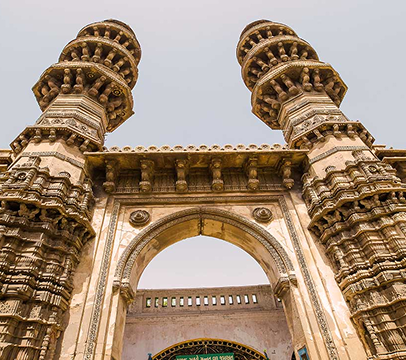
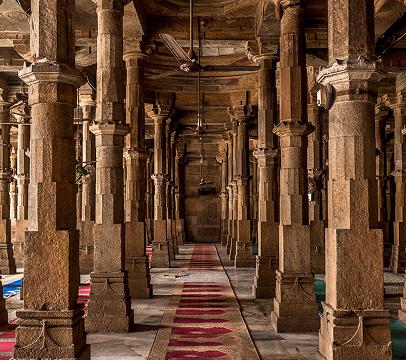
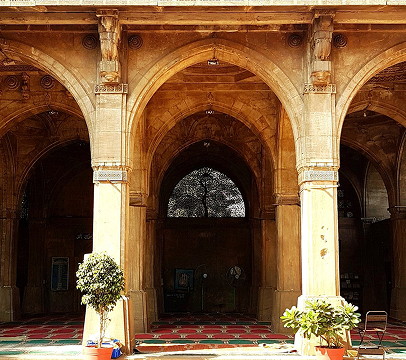
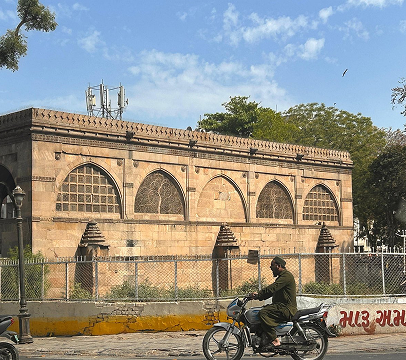
The Sidi Saiyyed Mosque was built during the final years of the Gujarat Sultanate, just before the Mughal influence became predominant. Sidi Saiyyed, who had gained prominence in the Sultanate, commissioned the mosque as a symbol of his devotion and gratitude. It was constructed entirely from yellow sandstone, with ten intricately carved windows along its side and rear arches.
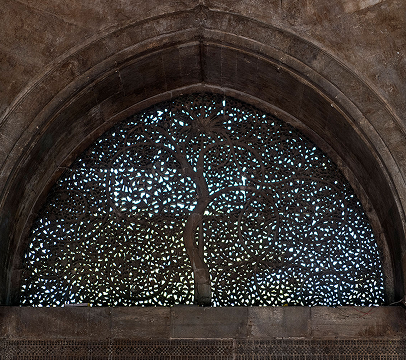
The most famous of these is the ‘Tree of Life’ jali, a 16-foot-wide lattice carving featuring intertwining branches and foliage. The precision and detail of the carving showcase the incredible skill of the artisans and have made the jali a symbol of Ahmedabad’s architectural heritage. Each stone is meticulously carved, with patterns that allow light to filter into the prayer hall, creating an interplay of shadows and sunlight. The mosque’s design is a harmonious mix of Islamic architectural principles with local Gujarati influences, making it distinctive among India’s historic structures.
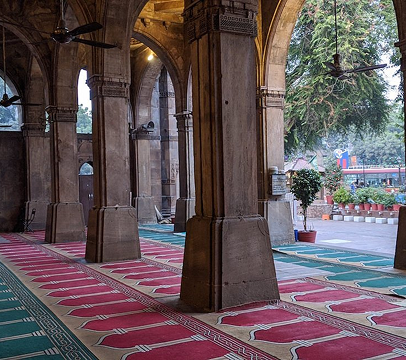
The mosque is modest in scale compared to some of the grander mosques of the era, yet its elegance lies in the intricacy of its carvings and the serene atmosphere it provides. It is believed that the mosque served as a place of worship and community gathering for both the local population and travellers passing through the city.